Track conditions: What to expect on this icon Great Walk
Understand Milford Track conditions including Mackinnon Pass, wet weather, terrain and difficulty on New Zealand’s Great Walk.
The Milford Track is one of New Zealand’s most iconic Great Walks, known as much for its changing conditions as its scenery. While the track is well formed and clearly signposted, it is more physically demanding than many first-time walkers expect.
It is not a technical hike, but it does require a good level of fitness and preparation, especially when weather conditions change.
Is the Milford Track Difficult?
The Milford Track is generally considered a moderate to challenging multi-day walk. There is no technical climbing, but walkers should be comfortable with long days on their feet, carrying a pack, and dealing with uneven terrain.
What many people underestimate is not individual sections, but the sustained nature of the walk over four days.

Mackinnon Pass
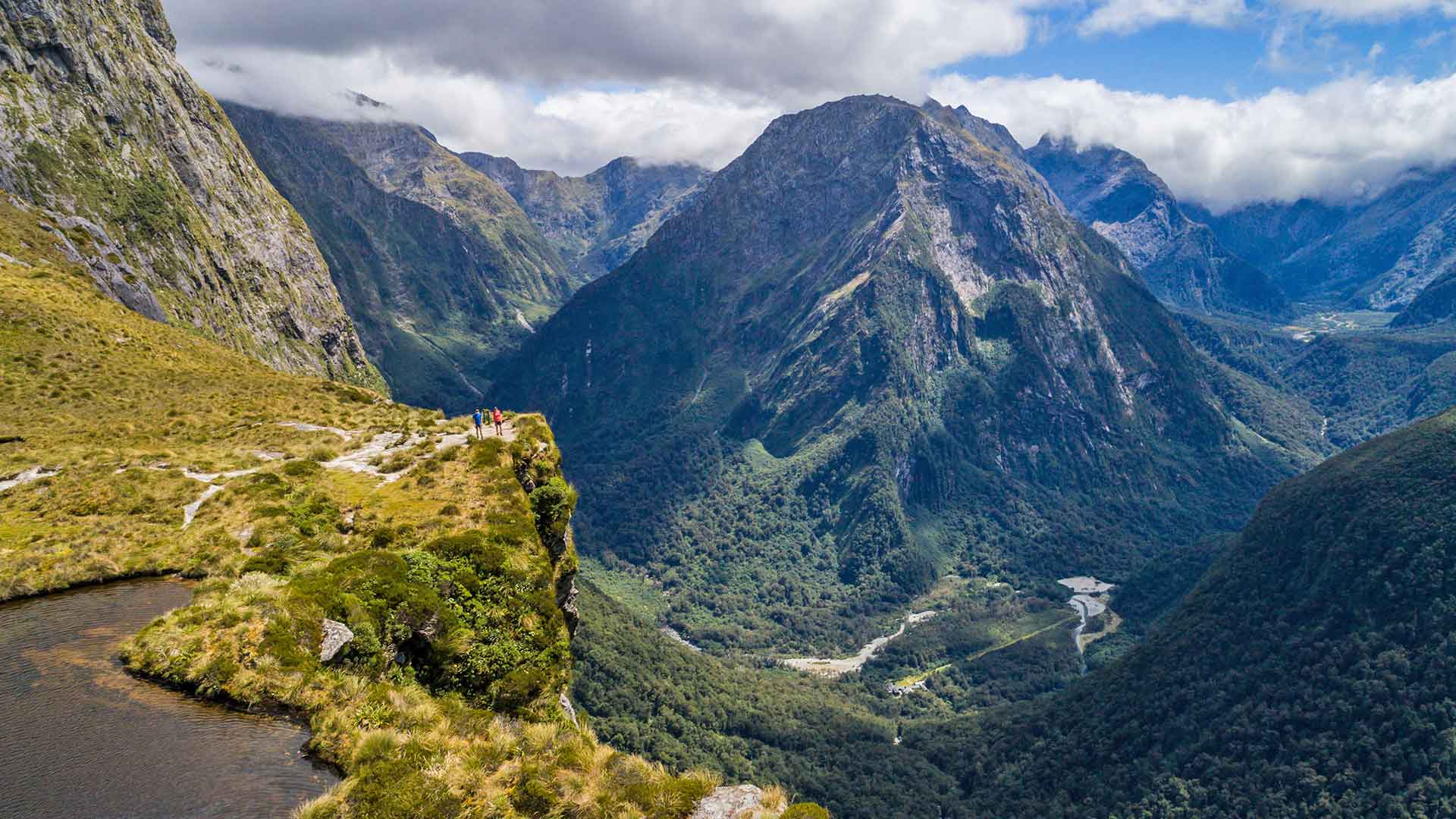
The most demanding section of the Milford Track is the crossing of Mackinnon Pass. The climb from the Clinton Valley is steady but sustained, rising gradually into exposed alpine terrain where the environment feels noticeably different from the forested valleys below. Weather conditions can change quickly here, with cloud, wind, and rain often moving through regardless of the forecast.
The descent from Mackinnon Pass into the Arthur Valley is often the more challenging part for many walkers. It is long, sustained, and requires careful footing, particularly after rain. The track becomes steeper in sections, with steps and uneven ground that can be slippery underfoot. Walking poles are often helpful for stability and reducing strain on the knees during this descent.

Weather and Track Conditions
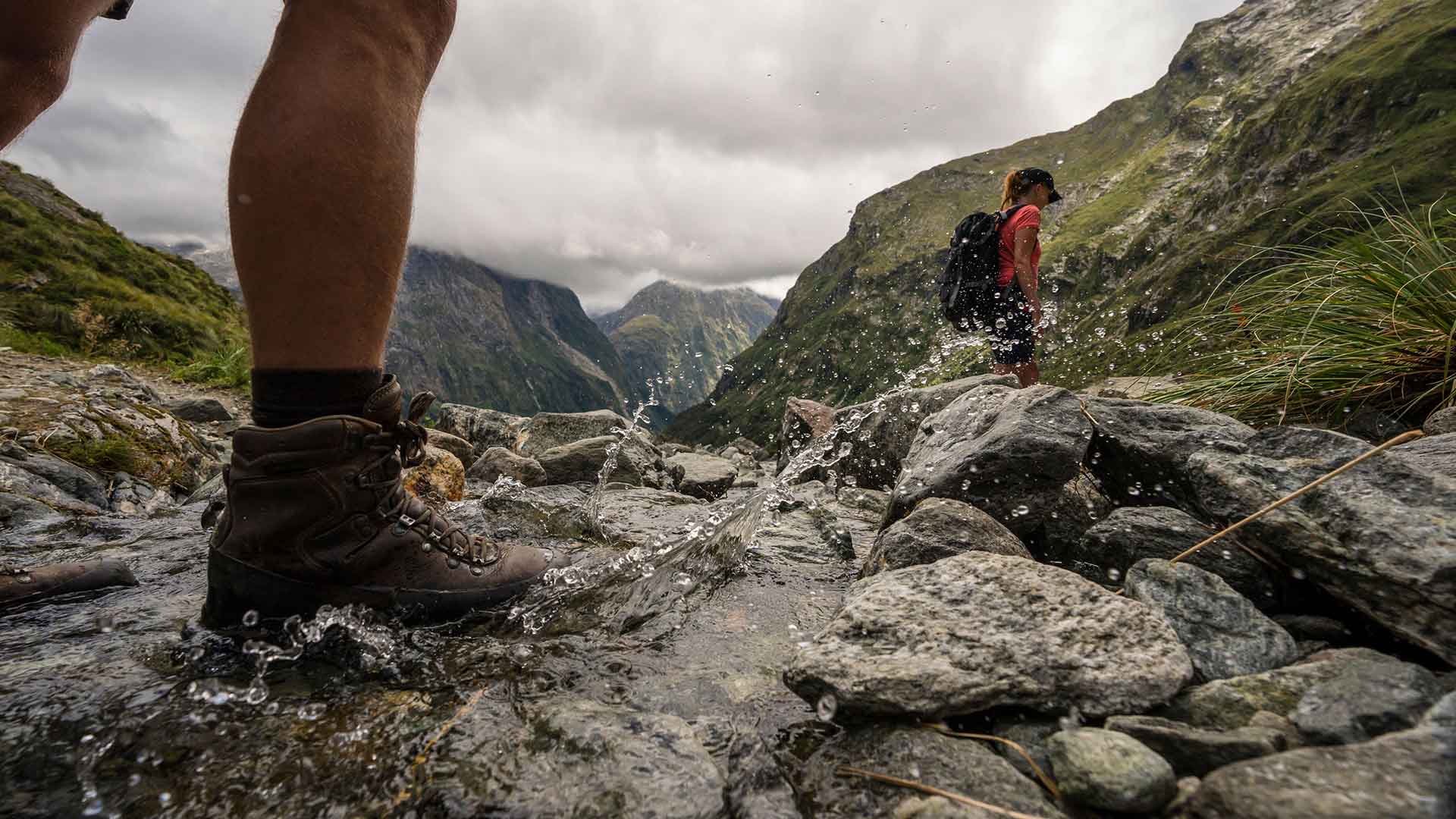
Weather has a major influence on track conditions. Both Fiordland and Mount Aspiring National Parks receive significant rainfall, and strong winds or even snow are possible at any time of year. Rivers and streams can rise rapidly, waterfalls may cascade across the trail, and track surfaces often become wet and slippery.
In these conditions, it is not unusual to walk through shallow water or encounter gusty winds in more exposed sections. Experienced guides monitor the conditions closely and will advise on the safest way to proceed. This is why packing the right clothing and equipment is essential.
Terrain
The track is well maintained, with a mix of gravel paths, boardwalks, and stepped sections. While navigation is straightforward, the terrain becomes more challenging in wet conditions, particularly on climbs and descents
What To Expect
Walkers should expect a mix of forest, river valleys, and alpine landscapes, along with variable weather and changing underfoot conditions. It is this combination that makes the Milford Track both rewarding and demanding.
The Milford Track is a memorable experience because of its natural variation in both landscape and conditions. With the right preparation, it offers one of the most rewarding multi-day walks in the world.
Related posts